Aspirion is a B2C revenue cycle management company based in the United States. They help healthcare systems and providers recover payment variances, money that would otherwise go uncollected.
Problem
HubSpot sits at the center of their marketing and lead generation operations, working alongside an integrated Salesforce instance that houses deal and campaign data. For a growing firm launching new service lines and managing multiple sales reps, visibility into what's working and what each rep is actually doing directly affects revenue predictability. Leadership at Aspirion faced three related risks that, left unaddressed, would have compromised growth and operational control.
Campaign Performance Was a Black Box: Their Marketing Hub Professional subscription didn't support native attribution reporting. Campaign influence data lived in Salesforce but couldn't surface in HubSpot dashboards. Without this visibility, marketing couldn't prove which efforts drove pipeline, and leadership couldn't allocate budget confidently. Every planning conversation was guesswork.
New Service Lines Launched Without Marketing Infrastructure: Aspirion was expanding into Payment Variance Recovery, a high-value service line, but had no automated lead nurturing in place. Prospects who expressed interest received no follow-up. Leads went cold. The sales team lacked a structured path to convert interest into opportunities, and marketing had no way to deliver educational value at scale.
Sales Activity Was Invisible to Leadership: Sales managers had no visibility into individual rep performance. Who was engaging contacts? Who was falling behind? Basic activity metrics (emails sent, meetings scheduled, engagement levels) weren't accessible without manual reporting. This meant problems weren't caught early, coaching was reactive, and forecasting was based on gut feeling rather than data.
Solution
The work required more than setup. It required prioritization, cross-platform thinking, and change management, connecting HubSpot's marketing automation and reporting capabilities to Salesforce's campaign and deal data while building systems that sales reps would actually use.
×
Part 1: Mapping the Gaps Between Systems and Outcomes
Audited HubSpot's subscription limitations and identified what could be solved inside the platform versus what required Salesforce integration
Analyzed existing form submissions and enrollment triggers to understand how leads were entering the system and where drop-offs occurred
Reviewed sales team workflows to determine what activity metrics mattered most to managers and how reps currently tracked their own work
Identified data inconsistencies (duplicate contacts, unstandardized fields) that would undermine reporting accuracy if not addressed
Confirmed that campaign influence data existed in Salesforce but wasn't being surfaced in a way leadership could act on
Part 2: Building Systems That Connect Marketing, Sales, and Leadership
Built a 7-email automated nurture workflow specifically for Payment Variance Recovery, including enrollment triggers tied to form submissions, placeholder educational content, and a final "Let's Talk" CTA to convert interested leads into booked consultations
Created individual sales rep dashboards tracking emails sent, emails opened, link clicks, page views, and form submissions, activity metrics tied to their assigned contacts and deals
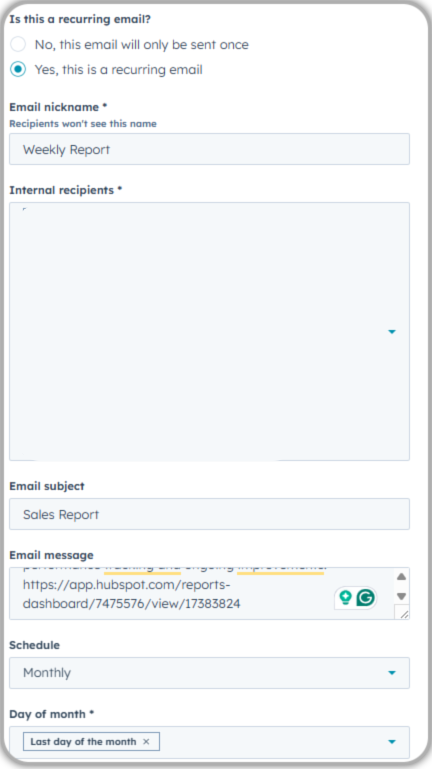
Set up weekly automated reminders so reps received their performance summary without requiring manual intervention from managers
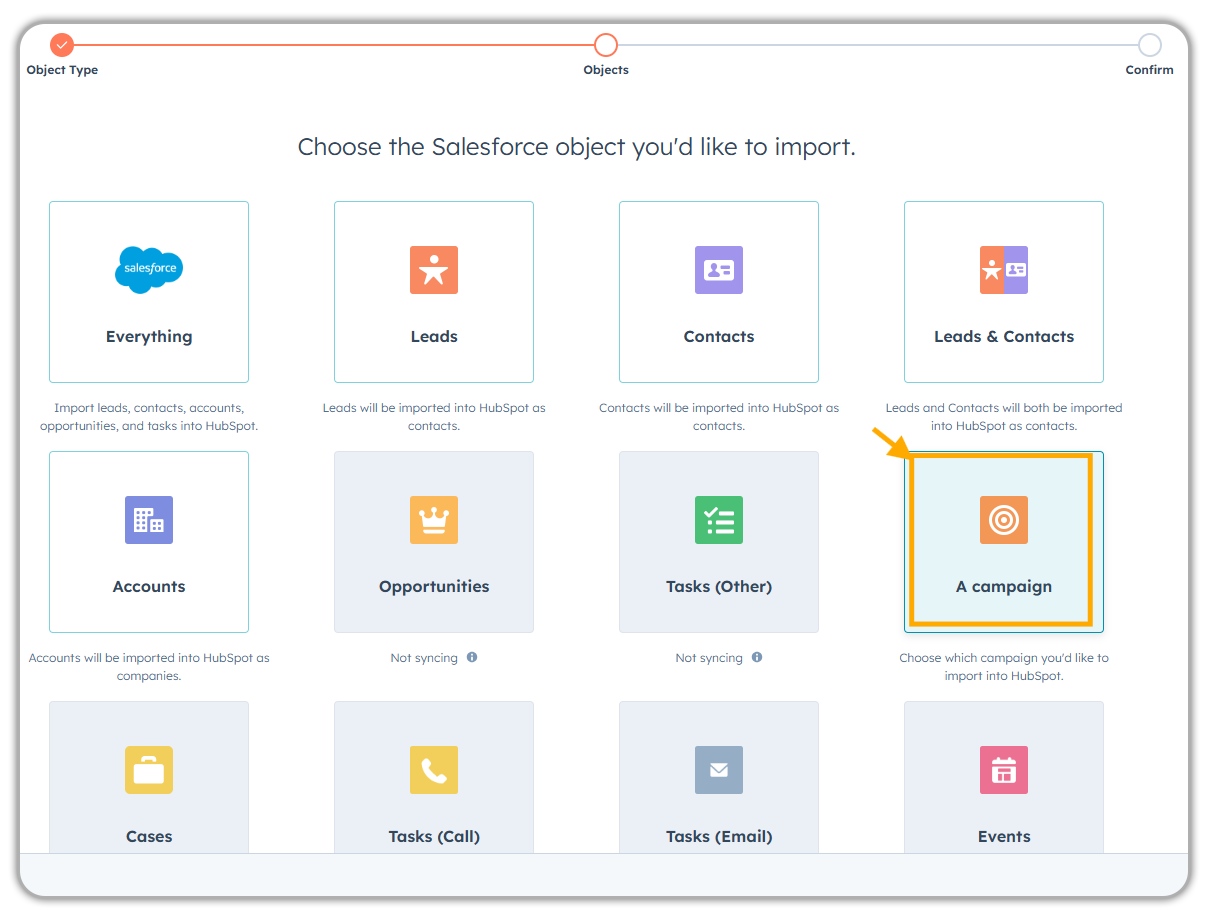
Designed a custom report pulling Salesforce campaign data into HubSpot to show Total Contacts & Deals per Campaign, giving marketing visibility into campaign influence despite platform limitations
Standardized contact data to eliminate duplicates and ensure reporting accuracy across both systems
×
×
Part 3: Ensuring Scalability and Ongoing Visibility
Structured the nurture workflow with delays and if/then logic to allow Aspirion's team to refine email content and timing without rebuilding the entire flow
Tagged all workflow assets (emails, workflows) for easy identification and future replication across other service lines
Built reports with filters and hyperlinks that allowed managers to drill into specific rep performance and navigate directly to HubSpot records
Positioned the Salesforce-HubSpot reporting bridge as a scalable model for future cross-platform visibility need
Results
Before: Campaign performance was invisible. New service lines launched without marketing follow-up. Sales activity tracking required manual reporting.
After: Leadership gained real-time visibility into marketing ROI and sales execution. Marketing could prove which campaigns influenced the pipeline. Sales managers could coach based on data, not intuition.
Financial Impact
Improved marketing-to-sales alignment: Campaign influence data now visible in HubSpot, enabling budget allocation decisions based on actual pipeline contribution rather than assumptions
Better campaign performance insight: Marketing could identify which campaigns drove contacts and deals, reducing wasted spend on underperforming initiatives
Increased pipeline predictability: Sales activity dashboards provided early warning signals when reps weren't engaging their book of business
Operational Impact
Improved sales activity visibility: Managers could review individual rep performance weekly without requesting manual reports or logging into multiple systems
Clearer sales next steps: Reps received weekly performance summaries with direct links to their HubSpot records, making it easier to prioritize follow-ups
Reduced manual sales work: Automated email sequences handled initial prospect education, freeing reps to focus on qualified conversations
Strategic Impact
Clearer performance reporting: Cross-platform visibility between HubSpot and Salesforce gave leadership a single view of marketing and sales performance without reconciling disconnected data sources
Growth-ready systems: Infrastructure was built to scale across service lines, not just solve immediate gaps
Data-driven decision-making: Reporting dashboards provided the metrics leadership needed to evaluate team performance, forecast pipeline, and allocate resources with confidence
Healthcare and B2B service companies often face the same challenge: marketing and sales data live in disconnected systems, and leadership can't see what's working without manual effort. When you're paying for HubSpot but can't prove ROI, growth slows, and budgets get questioned.





.svg)


.png?width=60&height=46&name=Vector%20(3).png)