How a Managed IT Services Provider Fixed Data Quality Issues to Improve Marketing Campaign Effectiveness with HubSpot
Technology
11-50 Employees
Marketing Hub |
Service Hub
Background
Pioneer 360 is a managed IT services provider based in the United States, serving small-to-midsize businesses with a particular focus on the banking, financial services, and healthcare industries. Their business model centers on long-term client relationships, typically spanning 3–5 years, requiring reliable marketing systems to support multi-touch nurture campaigns and industry-specific outreach.
Problem
HubSpot serves as the foundation of their marketing operations, supporting email campaigns, landing pages, contact segmentation, and lead tracking. Marketing drives pipeline generation, and the platform needed to support targeted account-based campaigns by industry without manual workarounds.
- Unreliable Contact Data Undermined Campaign Confidence: Pioneer 360's contact database contained duplicate contacts and companies created through multiple import sources over time. Records with identical email addresses, phone numbers, and names existed as separate contacts. Marketing couldn't trust their segmentation, and leadership had no confidence in campaign metrics. Running targeted campaigns meant risking duplicate sends and inaccurate reporting.
- Industry Segmentation Failures Blocked ABM Campaign Launch: Marketing had created industry-based segments for banking, credit unions, construction, manufacturing, and healthcare using NAICS codes and company type filters. But the data was unreliable—banks appeared in non-profit lists, credit unions were mislabeled, and the filtering logic produced false positives. With 12,000 marketing contacts already used and only 7,000 available capacity, launching campaigns on flawed segments risked billing overages and wasted outreach to the wrong prospects.
- No Systematic Email Infrastructure for Industry Campaigns: The account lacked standardized email templates and structured nurture workflows. Every campaign required manual build time, resulting in inconsistent branding and delayed deployment. Marketing wanted to launch seven industry-specific ABM campaigns with multi-touch sequences, but without templates, workflow automation, or clean segmentation, execution was impossible. The cost of inaction was clear: competitors were reaching the same prospects first.
Solution
This wasn't a setup project; it was a systems architecture and data remediation engagement. Pioneer 360 needed reliable data before automation could work, and they needed structured campaigns that could scale across multiple industries without breaking. We approached it as operational infrastructure, not quick fixes.
×
Part 1: Data Diagnosis & Segmentation Architecture
- Conducted comprehensive account audit covering 82 workflows (only 13 active), email templates, forms, and contact lists to identify overlapping automations and conversion barriers
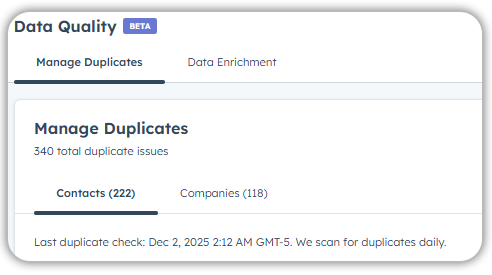
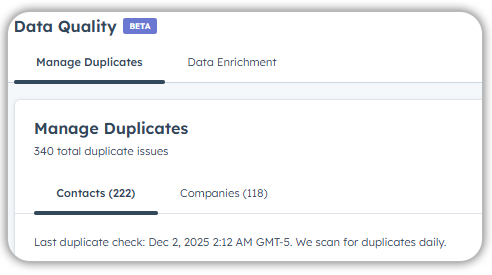
- Analyzed contact database using HubSpot's manage duplicates tool, validating 222 duplicate contacts and 118 duplicate companies by email, phone number, and name similarity
- Established merge rules prioritizing most recently updated records while preserving non-empty fields, opt-in status, lifecycle stage, and owner assignments
- Confirmed NAICS code source and reviewed existing filtering logic to diagnose why banks appeared in non-profit lists and credit unions were mislabeled
- Decided on manual validation for high-priority segments combined with workflow automation to mark contacts as marketing contacts only when meeting verified enrollment criteria
Part 2: Campaign Infrastructure & Template Deployment
- Merged all validated duplicate contacts and companies, ensuring activities, notes, and associations transferred to primary records without data loss
- Implemented workflow automation to prevent billing overages by automatically updating marketing contact status only for segment-qualified prospects
- Built seven industry-specific ABM workflows (banking, credit unions, engineering, manufacturing, government, construction, healthcare) with five automated emails per workflow, totaling 35 emails
- Configured each workflow with 2–3 day delays between sends, enrollment based on industry segment criteria, and automatic unenrollment when contacts booked meetings, bounced, or unsubscribed
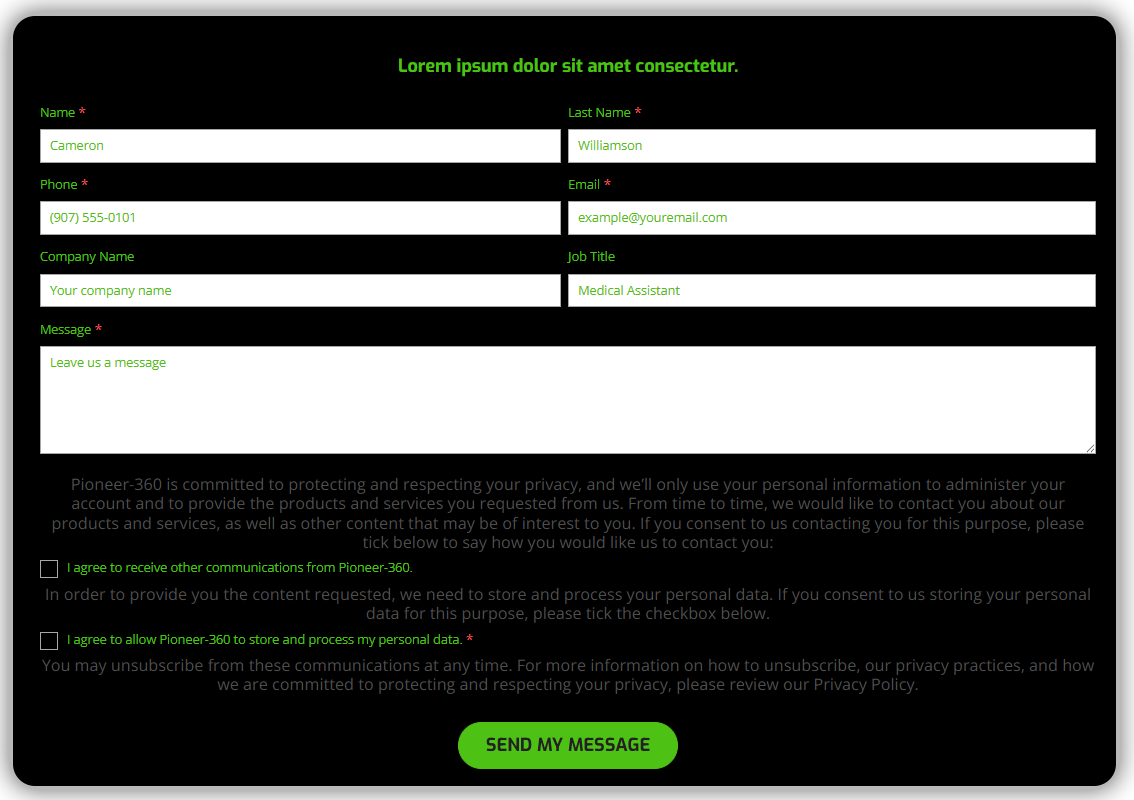
- Created standardized email templates (standard, full-width, and newsletter formats) using Pioneer 360's brand guidelines and designed eight industry-specific landing pages with embedded lead capture forms and meeting booking CTAs
×
×
Part 3: Process Documentation & Quality Controls
- Documented naming conventions for workflows and assets to maintain organization as the account scales with additional campaigns
- Established list segmentation protocols with validation steps before import to prevent future data quality degradation
- Configured all workflows with review status until client approval, ensuring marketing maintained control over timing and messaging before launch
- Created repeatable process for adding new industry campaigns using established template and workflow structure without rebuilds
- Trained team on HubSpot best practices for theme navigation, form optimization, and campaign analytics tracking (open rates, click rates, bounce rates)
Results
Before: Pioneer 360 operated with unreliable contact data, no standardized email infrastructure, and no ability to launch industry-targeted campaigns at scale.
After: They launched seven automated ABM campaigns with clean data, industry-specific messaging, and full visibility into campaign performance.
Operational Impact
- More repeatable processes: Standardized email templates and landing page structures eliminated manual build time for each new campaign. Marketing could now deploy industry-specific campaigns using proven templates instead of starting from scratch.
- Improved trust in HubSpot data: Database deduplication and merge protocols created a single source of truth for contact records. Marketing could segment with confidence knowing contacts wouldn't receive duplicate sends or appear in multiple lists incorrectly.
- Improved marketing-to-sales alignment: Industry-specific workflows with automated meeting booking and unenrollment logic meant sales received qualified leads with clear context. No more confusion about which prospects had been contacted or were ready for follow-up.
- Better campaign performance insight: Clean segmentation and standardized tracking enabled accurate reporting on open rates, click rates, and bounce rates by industry. Marketing could finally identify which campaigns performed and which needed adjustment.
Strategic Impact
- Growth-ready systems: The ABM campaign infrastructure scales to additional industries without requiring rebuilds. New campaigns deploy using existing templates and workflows, reducing time-to-market for future initiatives.
- Real-time business visibility: Leadership gained visibility into campaign performance by industry segment, supporting data-driven decisions about where to focus marketing resources and which verticals showed the strongest engagement.
- Improved forecasting confidence: Clean data and automated workflows provided consistent pipeline activity reporting. Leadership could track campaign progression and conversion patterns across industries with reliable metrics.
Similar companies face similar risks when contact data quality degrades and marketing automation lacks structure. The difference isn't HubSpot's capabilities; it's how those capabilities are architected to support your specific go-to-market strategy.
If you're running targeted campaigns but lack confidence in your data or your ability to scale outreach without manual work, we can help.
Book a free consultation to discuss your specific situation.
Others Case studies
Technology
Marketing Hub |
Service Hub
11-50 Employees