Skip to content

How a Conference Organizer Fixed Revenue Visibility and Manual Sales Processes to Achieve Operational Scalability with HubSpot

Event Management 11-50 Employees Sales Hub | Marketing Hub | Service Hub
How a Conference Organizer Fixed Revenue Visibility and Manual Sales Processes to Achieve Operational Scalability with HubSpot
Background-icon

Background

Behavioral Health Tech organizes an annual behavioral health conference, selling sponsorships and exhibitor booth packages to companies in the healthcare sector. Their revenue model depends on managing hundreds of unique sponsorship deals, each with different deliverables, pricing structures, and fulfillment requirements.
Problem-icon

Problem

HubSpot served as their deal management and customer tracking system, but they had effectively inherited a setup that was never architected for their business model. As they scaled, the gaps between how HubSpot was configured and how their business actually operated became operational liabilities.


  • Revenue Leaking Through Manual Invoice Processes: The sales team closed deals in HubSpot, but everything after that required manual intervention. When a quote was signed, someone had to manually create an invoice in QuickBooks, manually send it to the customer, then manually link it back to the deal in HubSpot. Company naming conventions didn't match between systems, creating invoice matching errors and hours spent reconciling customer records. The cost wasn't just time. It was lost financial visibility. Leadership couldn't trust pipeline-to-cash reports because the connection between closed deals and actual invoices was maintained through human memory rather than system architecture.


  • No System for Tracking What Was Promised vs. What Was Delivered: Every sponsorship deal included a different mix of deliverables: booth space, branding placements, speaking slots, promotional emails, and event programming. The sales team tracked fulfillment in a shared spreadsheet. As deals grew more complex, the spreadsheet became a single point of failure. Account managers didn't have real-time visibility into which deliverables had been sent to clients, which were still in progress, and which were at risk of being missed. The result was reactive customer management and internal friction as different teams tried to figure out who was responsible for what.


  • Sales Director Operating Without Visibility: The sales director couldn't see what she needed to manage her team. Standard HubSpot reports showed activity counts but didn't surface patterns. She needed to compare week-to-week trends to spot early performance issues. She needed to understand why one rep was losing deals at a higher rate than others. She needed to see if deals further down the pipeline were getting the attention they deserved based on response time data. Without this visibility, coaching conversations were guesswork. Underperformance went unnoticed until it was too late to course-correct.
Light-Bulb

Solution

This wasn't a list of fixes; it was a phased rebuild. We diagnosed root causes before recommending solutions, prioritized work that removed the highest-risk operational bottlenecks first, and built systems designed to scale as the event grew.

Group 139-2 Group 139-2
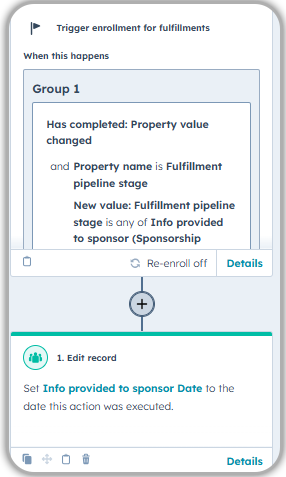
Sponsorship product delivery tracking
Group 141 (1)
Sponsorship product delivery tracking
Group 141 (1)
×

Part 1: Diagnosing System Architecture Failures and Data Integrity Gaps

  • Conducted a full audit of the QuickBooks-HubSpot sync to identify why 1,546 contacts were failing to sync while 33,543 were excluded, documenting naming convention mismatches and data integrity issues that prevented reliable automation
  • Analyzed existing lead source data to uncover attribution blind spots caused by inconsistent tracking, preparing the foundation for accurate channel performance reporting
  • Mapped the complete deal-to-invoice-to-fulfillment workflow to identify every manual handoff point and the business risk each one created
  • Evaluated existing reporting against the sales director's actual management needs to determine what was missing versus what was simply misconfigured
  • Assessed sponsorship product delivery tracking to understand why the spreadsheet method was failing and what data structure would support fulfillment visibility at scale

Part 2: Building Automation Architecture and Eliminating Manual Dependencies

  • Created custom UTM properties (source, medium, campaign, content) and configured all forms to capture them as hidden fields, then migrated historical lead source data to preserve attribution continuity
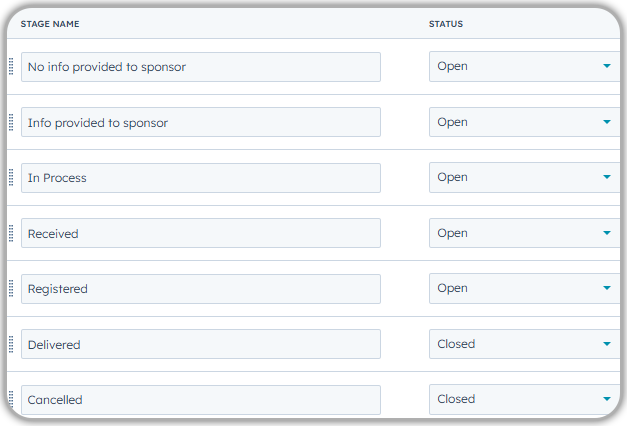
  • Designed and implemented a custom "Fulfillment" object with stage-based tracking (info provided, deliverables received, in process, delivered, cancelled) and automated task creation when deals reached closed won, replacing the spreadsheet with a system of record
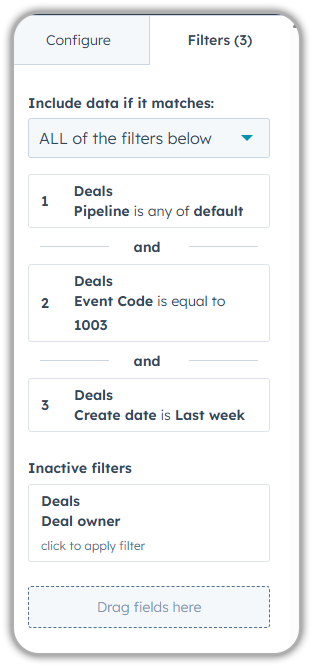
  • Built a new sales activity dashboard with week-to-week and day-to-day comparison reports for deals created, calls made, and emails sent, plus response time analysis by pipeline stage and closed lost breakdown by deal source
  • Developed custom formula-based reports to automatically calculate square footage sold across different booth types, eliminating manual inventory math and providing real-time space availability data
  • Created association label-based lists to segment sponsors by contact type (customer success, sales, finance) for targeted communication while maintaining clean data relationships
Custom "Fulfillment" object with stage-based tracking
Group 141 (1)
Custom "Fulfillment" object with stage-based tracking
Group 141 (1)
×
Data governance
Group 141 (1)
Data governance
Group 141 (1)
×

Part 3: Establishing Operational Controls and Future-Ready Infrastructure

  • Executed data cleaning protocols to identify and resolve duplicate contacts, incomplete records, and records without clear ownership, then implemented contact owner automation to prevent future assignment gaps
  • Documented QuickBooks integration optimization recommendations with clear guidance on naming convention alignment, company sync rules, and automated invoice creation triggers
  • Implemented a lead scoring system with separate fit and engagement point tracking to provide sales with qualification signals before manual outreach
  • Built reporting infrastructure that gives leadership visibility into booth inventory, sponsorship fulfillment status, and sales rep performance patterns without requiring manual data exports or spreadsheet analysis
  • Established data governance practices that maintain system reliability as team size and deal volume increase
Vector (3)

Results

Before: Wrap Technologies was managing lead assignment manually, sending generic follow-up regardless of product interest, and relying on spreadsheet-based sales tracking.
After: They had territory automation, product-specific nurturing, and real-time revenue visibility.
  • Financial Impact

    • Improved sales-ready leads: Automated territory assignment eliminated routing delays, getting leads to the right rep immediately based on geographic coverage
    • Clearer revenue visibility: Custom reporting gave leadership real-time visibility into which reps and which product lines were tracking toward quarterly goals


  • Operational Impact

    • Reduced manual sales work: Territory-based lead distribution removed the need for manual lead routing and reduced administrative friction between marketing and sales
    • Improved follow-up consistency: Product-specific automation journeys ensured that every contact received relevant follow-up based on which solution they were evaluating, not generic messaging
    • Faster sales rep onboarding: Documented workflows and automated assignment logic meant new sales hires could start contributing faster without needing to learn complex manual processes

  • Strategic Impact

    • Growth-ready systems: The HubSpot infrastructure was built to handle higher lead volume and additional product lines without requiring architectural changes
    • Single source of truth: Integration between HubSpot and NetSuite eliminated data discrepancies between sales, finance, and operations teams
    • Increased ROI from HubSpot subscription: By implementing automation, reporting, and proper data architecture from day one, Wrap Technologies avoided the common trap of paying for HubSpot but using it like a glorified spreadsheet
Many law enforcement technology providers and specialized B2B companies face the same challenge Wrap Technologies did: outgrowing a basic CRM while trying to scale sales operations without adding headcount.
 
If your team is managing territories manually, sending generic follow-up, or making decisions without real-time pipeline visibility, we can help you build the systems that make growth predictable instead of chaotic.
 
Book a free consultation to discuss your specific situation.

Others Case studies

Only Using 10% of HubSpot?

You can get these results too:

Group 14 (1) Group 14 (1)