How a Multi-Brand Property Management Firm Unified Three Business Units to Gain Real-Time Visibility and Scale Operations with HubSpot
Real Estate/Property Management
11-50 Employees
Sales Hub |
Service Hub
Background
Condominium Associates is a property management company based in St. Petersburg, Florida, serving residential and commercial properties across the Tampa Bay area and 10 counties throughout Florida. They manage condominiums, HOAs, co-ops, and commercial office parks for board members and property owners.
Problem
HubSpot served as their central CRM, but it wasn't configured to handle the complexity of multiple brands operating under one roof. Leadership faced three operational risks that threatened their ability to scale and make confident decisions across a growing portfolio of brands.
- Fragmented Brand Operations Blocking Growth Decisions: With three brands sharing one HubSpot portal but no business unit structure, executives couldn't answer basic questions: Which brand is driving new opportunities? Where should marketing dollars go? Which sales team needs support? Every report mixed data from all three brands, forcing manual spreadsheet work to separate performance by entity. Board meetings required days of preparation to pull brand-specific metrics.
- Manual Sales Qualification Creating Revenue Leakage: Sales reps used inconsistent criteria to qualify property management leads. Some pursued deals that didn't meet target profiles (wrong property type, outside service area, no management change planned). Others spent time on leads that hadn't completed qualification steps. Without automation, deal creation was manual, naming conventions varied, and opportunities fell through the cracks when reps forgot follow-up tasks.
- Disconnected Systems Limiting Operational Efficiency: The team used Squarespace for websites, Monday.com for project management, and HubSpot for sales, but none of these systems talked to each other. Website visitors weren't tracked. Closed deals required manual data entry into Monday.com. Marketing couldn't prove which campaigns drove revenue because attribution data didn't exist. The company was paying for multiple tools that didn't work together.
Solution
This wasn't a setup project; it was a multi-brand architecture build. We needed to create separate business operations within a shared system, then connect that system to external tools and websites the company relied on.
×
Part 1: Business Unit Architecture and Data Foundation
- Configured HubSpot Business Units to separate three brands with distinct themes, branding, email sending domains, and reporting structures
- Set up DNS records (DKIM, SPF) and email authentication for each brand to enable proper email deliverability from multiple domains
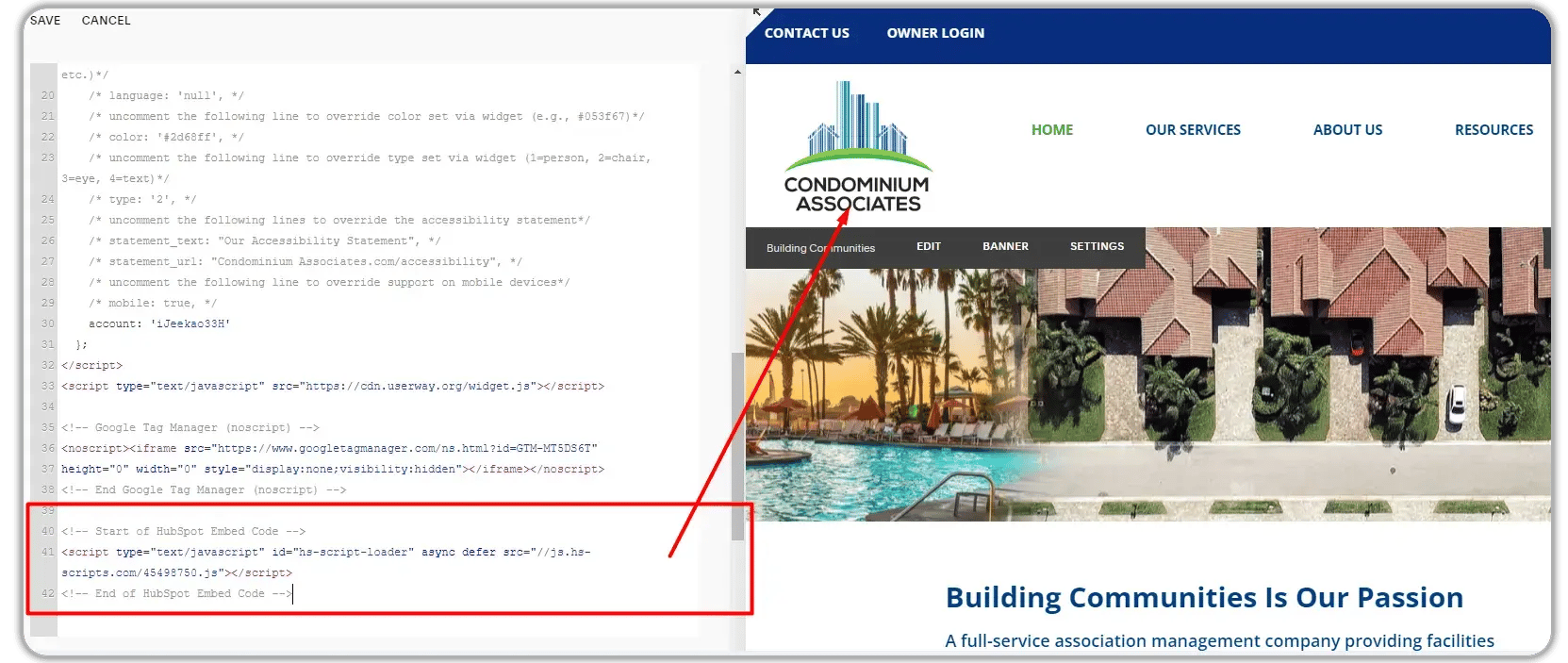
- Installed HubSpot tracking code across three websites (condominiumassociates.com, precedentmgt.com, artemislifestyles.com) to capture visitor behavior and attribution data
- Designed custom theme templates, including email templates, blog templates, landing pages, and pillar pages, for each business unit to maintain brand consistency
Part 2: Sales Process Standardization and Automation
- Built two deal pipelines with stage-specific criteria mapped to qualification requirements (property type, service area, management change timeline)
- Created deal workflows that auto-assigned owners, set naming conventions, triggered follow-up tasks at each stage, and enforced required property data before stage progression
- Implemented lead scoring based on engagement signals and qualification criteria to help reps prioritize high-intent prospects
- Integrated Monday.com with HubSpot to automatically sync closed deals into project management boards, eliminating double data entry
×
×
Part 3: Cross-Brand Visibility and Reporting Infrastructure
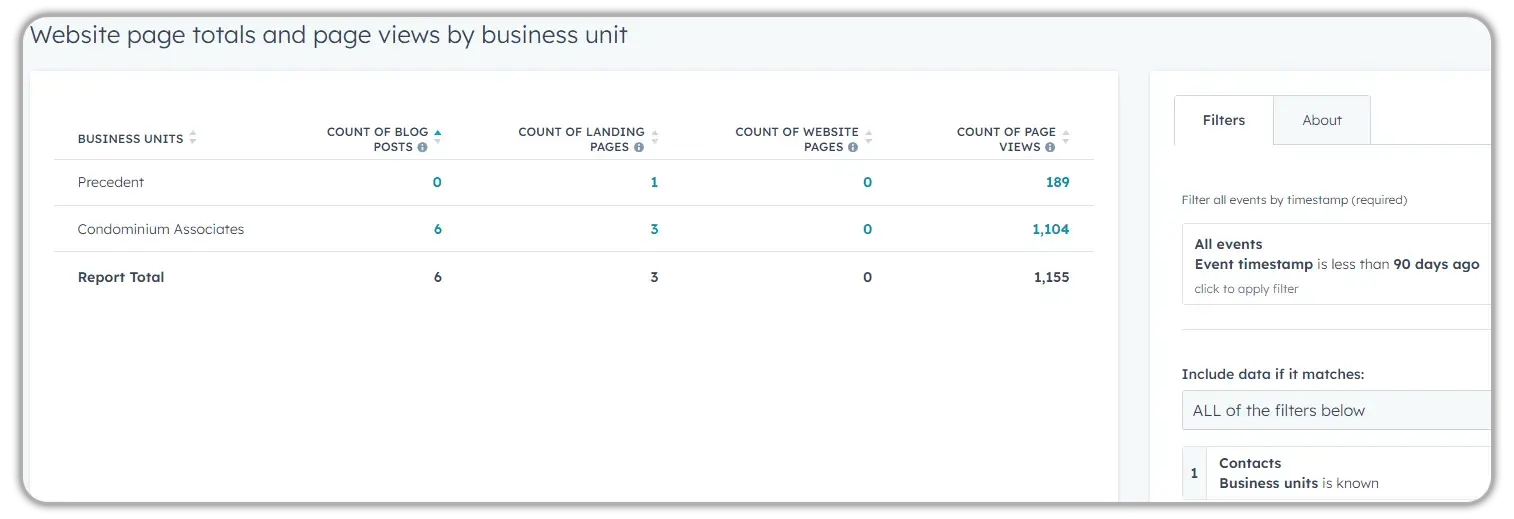
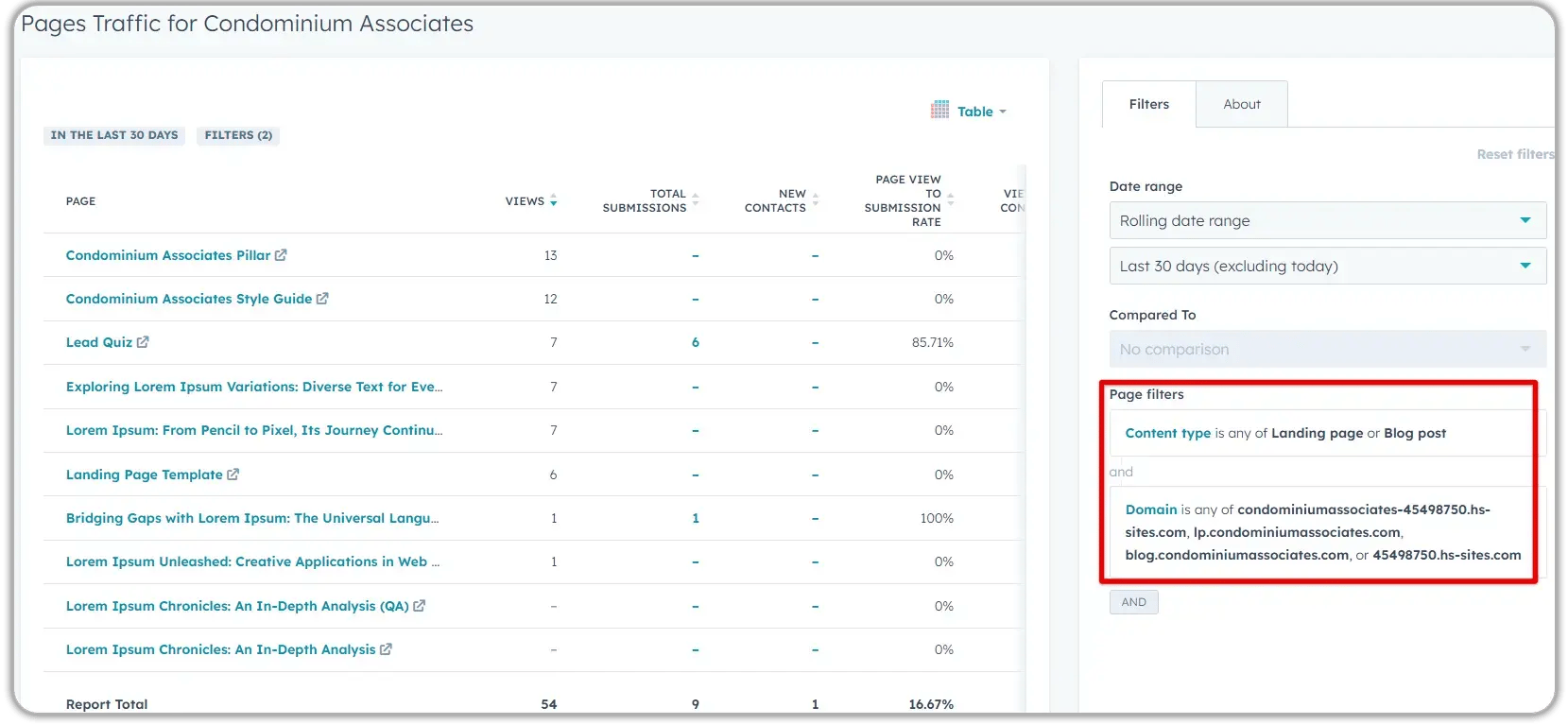
- Created a Business Unit Overview dashboard that filtered all reports by brand: contact creation, pipeline velocity, website traffic, and campaign performance
- Built custom analytics reports that allowed leadership to compare brand performance side-by-side or aggregate company-wide metrics
- Set up marketing dashboards with email engagement, form submissions, and landing page conversions, segmented by business unit, to track ROI by brand
- Established system pages and subscription management for GDPR compliance across all brands
Results
Before: Three brands operating in isolation, manual qualification, no website tracking, disconnected systems
After: Unified HubSpot architecture with brand-level reporting, automated sales processes, integrated tech stack
-
Financial Impact
- Real-time pipeline visibility across three brands: Leadership no longer relies on manual spreadsheet work to understand which brand is driving opportunities; all pipeline data is automatically segmented and viewable in real time.
- Clear revenue attribution by brand and campaign: Marketing can now prove ROI with connected website tracking and form attribution, enabling confident budget allocation decisions across different brand initiatives.
-
Operational Impact
- Consistent sales qualification eliminated revenue leakage: Sales reps now follow standardized criteria with automated deal workflows that enforce property type, service area, and management change requirements before deals progress.
- Email deliverability improved with proper infrastructure: DNS setup and brand-specific sending domains ensured marketing emails reached inboxes, protecting sender reputation across all three business units.
- Monday.com integration eliminated double data entry: Closed deals automatically sync into project management boards, removing manual handoff delays between sales and operations teams.
-
Strategic Impact
- Brand-level performance comparison in real time: The leadership dashboard provides side-by-side brand metrics or company-wide aggregation, enabling data-driven decisions about market expansion and resource allocation.
- Confidence in expansion decisions backed by data: With clear visibility into which brands perform best in which markets, leadership can evaluate acquisition opportunities against actual performance benchmarks.
- Scalable foundation for future growth: New brands can be added as business units without rebuilding infrastructure; the architecture supports multi-brand operations at scale.
Property management companies with multiple brands face the same operational blind spots: fragmented data, manual processes, and disconnected systems that block growth decisions.
If your company manages multiple entities or brands in HubSpot and you're relying on spreadsheets to understand performance, we can help you build the reporting infrastructure and process automation that creates confidence in your next moves.
Book a free consultation to discuss your specific situation.
Others Case studies
Home Decor
Sales Hub |
Marketing Hub
11-50 Employees