How a Commercial Furniture Company Rebuilt Sales Team Trust in HubSpot to Improve Pipeline Predictability and Reduce Lead Leakage
Home Decor
11-50 Employees
Sales Hub |
Marketing Hub
Background
Forward Tilt is a commercial furniture and design company based in Scottsdale, Arizona. They serve businesses that need workspace design solutions, from furniture selection to full office planning.
Problem
Forward Tilt's leadership faced a problem that many growing companies encounter after their first HubSpot implementation: the sales team had stopped trusting the CRM.
- Sales Reps Were Avoiding HubSpot Due to Previous Implementation Issues: The portal contained workflows and properties from earlier implementations that no one understood or used. Sales reps couldn't tell which fields mattered, which automations were active, or whether the data they were looking at was accurate. When a system feels unreliable, people route around it, which is exactly what was happening.
- Duplicate and Incomplete Records Made Reporting Unusable: Over 1,200 duplicate company records existed in the system, along with contacts missing basic information like email addresses and phone numbers. Leadership couldn't trust pipeline reports, and sales reps wasted time figuring out which record was current. Every forecast conversation started with questions about data accuracy instead of business performance.
- No Systematic Lead Follow-Up Meant Opportunities Were Being Lost: Leads came in from multiple sources (website forms, referrals, webinars, and social media), but there was no consistent process for assignment, follow-up, or progression. Without clear stages or automated reminders, leads sat unworked or fell through the cracks entirely. The team knew they were losing revenue but couldn't measure how much or where.
Solution
Fixing this required more than technical cleanup. It required re-establishing HubSpot as the system of record, rebuilding the sales team's confidence in the data, and creating a lead management process that was both reliable and repeatable.
We approached this in three phases: clean the foundation, architect the right process, and enable adoption through automation and visibility.
×
Part 1: Foundation Reset: Establishing Trust Through Data and System Integrity
- Audited every active and draft workflow in the account, documenting which were in use and which had been abandoned by previous implementations, then deactivated outdated automations that were creating confusion
- Reviewed contact and company properties to identify fields that were no longer used, incorrectly structured, or duplicative, reducing portal clutter and decision fatigue for the sales team
- Merged 1,203 duplicate company records and 20 duplicate contact records, establishing merge rules that preserved the most complete information and maintained associations
- Identified and flagged contacts missing critical fields like email addresses and phone numbers, providing a cleanup report that leadership could use for ongoing data governance
- Rebuilt the theme, email templates, and landing page templates to align with Forward Tilt's brand, signaling to the team that this was a fresh start with proper execution standards
Part 2: Lead Process Architecture: Designing for Reality, Not Theory
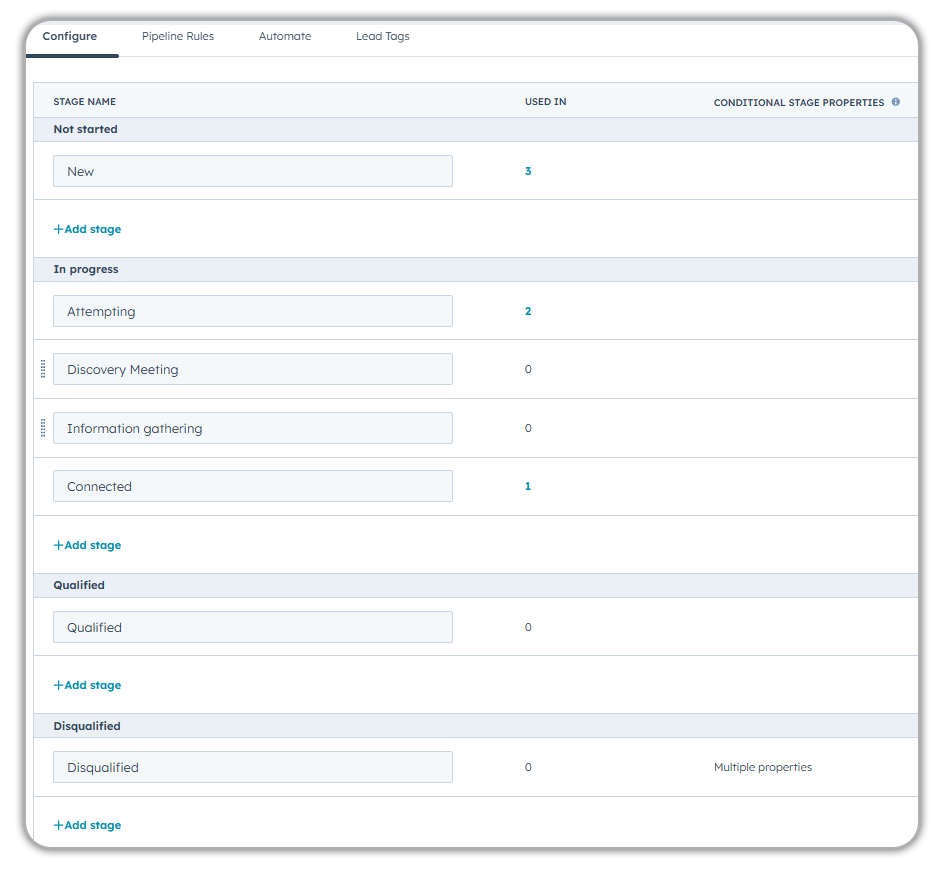
- Built a five-stage lead pipeline (New → Attempting → Discovery Meeting → Information Gathering → Qualified/Disqualified) that reflected the real decision points in their sales process
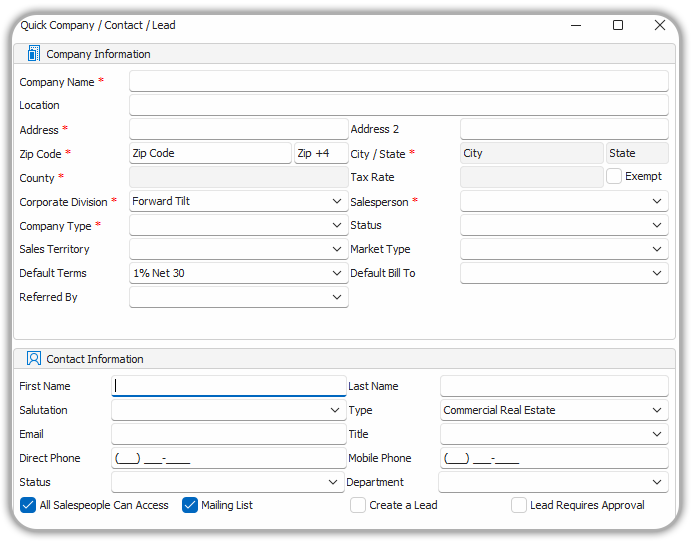
- Created custom properties for Contact Type, Market Type, Referral Source, and Scopes, giving the team the context they needed to evaluate fit and prioritize outreach
- Designed assignment logic where all leads initially route to a lead coordinator, who then manually assigns to the right salesperson based on territory, expertise, or availability, preserving human judgment while ensuring nothing gets missed
- Built a Discovery Meeting Form that captures key qualification information and automatically moves leads to the Information Gathering stage, reducing manual stage updates and data entry
- Integrated an Acceleration Plays checklist into the Information Gathering stage, providing sales reps with a clear playbook for what questions to ask and what information to gather before handoff to eManage
×
×
Part 3: Automation and Accountability: Making Follow-Up Inevitable, Not Optional
- Configured workflows to automatically create a task for the assigned salesperson as soon as a lead enters the system
- Set up a 3-day reminder workflow if a Discovery Meeting hasn't been scheduled, ensuring that leads don't sit idle and giving leadership visibility into response times
- Automated stage progression when a meeting is booked or the Discovery Form is submitted, keeping the pipeline accurate without requiring manual updates
- Built a 5-business-day recurring reminder workflow in the Information Gathering stage, nudging reps to move toward qualification or disqualification instead of letting leads linger
- Created a Qualified/Disqualified property with a workflow that triggers an automatic task to prepare the eManage handoff when a lead is marked as Qualified, ensuring smooth transitions to project execution
Results
Before: Forward Tilt's sales team viewed HubSpot as unreliable and worked around it. Duplicate records, unclear workflows, and inconsistent follow-up meant leadership couldn't trust pipeline data, and opportunities were being lost.
After: HubSpot became the system that holds the team accountable and makes their jobs easier. Clean data, automated processes, and clear next steps restored confidence in the CRM and established a repeatable lead management system.
-
Financial Impact
- Improved Pipeline Predictability: With duplicate records removed and clear stage definitions, leadership can now trust the numbers they're presenting to stakeholders. The systematic follow-up process means fewer opportunities slip through unworked, protecting potential revenue that was previously being lost to inconsistency.
- Improved Revenue Visibility: Leadership gained confidence in pipeline data and forecasting. They can trust that what's in HubSpot reflects reality, making board discussions and planning conversations data-informed rather than based on guesswork.
-
Operational Impact
- Reduced Manual Sales Work: Automation handled task creation, stage movement, and recurring reminders, decreasing the administrative burden on sales reps. Time previously spent on manual updates is now available for working leads and closing deals.
- Improved Follow-Up Consistency: Sales reps gained clearer next steps at every stage, with automated reminders ensuring that no lead sits idle for too long. Reps no longer need to remember who to contact or when—the system prompts them.
- More Repeatable Processes: The Acceleration Plays checklist provides a repeatable framework for information gathering, reducing reliance on individual judgment and making onboarding faster for new team members. The handoff to eManage became more reliable, reducing friction between sales and project execution teams.
-
Strategic Impact
- Real-Time Business Visibility: Forward Tilt's leadership gained visibility into where leads are getting stuck and how quickly the team is responding. They can identify bottlenecks and coach reps based on actual system data rather than anecdotal reports.
- Single Source of Truth: The clean, organized portal signals to the sales team that HubSpot is a tool they can rely on, not a mess they need to navigate around. The system now functions as the system of record for lead management and qualification.
- Growth-Ready Systems: The system is now built for scale. As Forward Tilt grows, the lead process can handle higher volume without breaking. New sales reps have a clear playbook to follow, and leadership has the data they need to make decisions with confidence.
Many growing companies face this same pattern: an initial HubSpot setup that worked for a while, then stopped working as the business evolved. The result is usually a combination of data problems, process gaps, and a sales team that's lost confidence in the system.
If your team is routing around HubSpot instead of relying on it, or if you're not sure your pipeline data is accurate enough to forecast from, we can help.
Book a free consultation to discuss your specific situation.
Others Case studies
Fuel Distribution
Sales Hub |
Marketing Hub
11-50 Employees