How a Digital Asset Platform Reduced Revenue Leakage and Gained Pipeline Control with HubSpot Automations
Financial Services
11-50 Employees
Sales Hub |
Service Hub |
Marketing Hub
Background
Gemini Constellation is a B2B digital asset platform operating in the United States, serving institutional investors and qualified clients in the cryptocurrency and blockchain space. As a regulated financial services provider, the company relies on HubSpot to manage complex sales cycles, track marketing event performance, and maintain data integrity across high-value prospect relationships.
Problem
Leadership faced three interconnected problems that threatened both immediate revenue and long-term growth capacity.
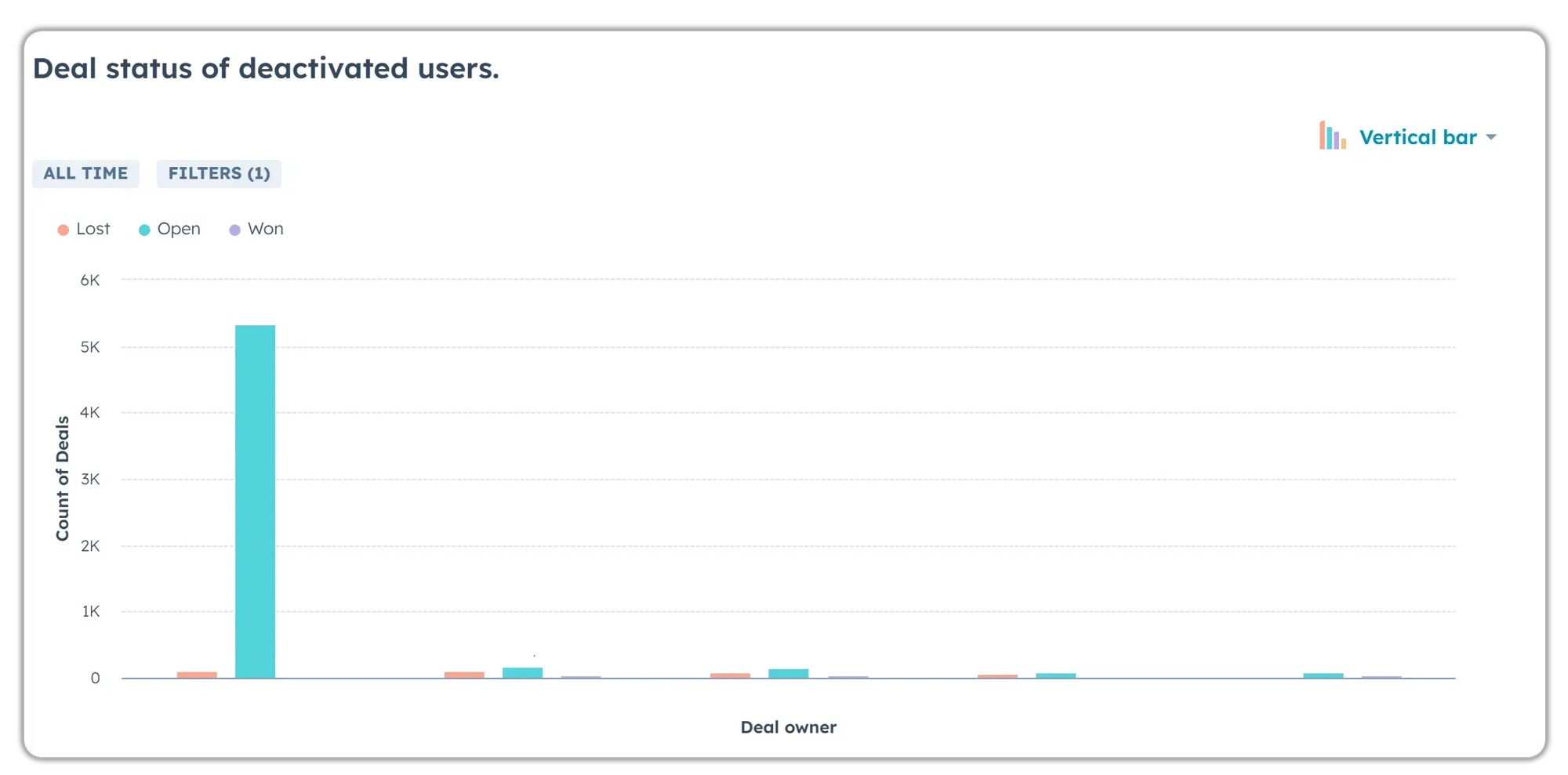
- Deals were disappearing without a clear owner: nearly 30 sales reps had been deactivated or marked inactive, leaving deals in limbo. Without a systematic way to identify orphaned opportunities or reassign ownership, the team had no visibility into how many deals were at risk. Some deals sat untouched for months, while others moved to "cold" status without triggering any notification to leadership. The question wasn't just about lost revenue; it was about not knowing what was being lost.
- Marketing couldn't prove which investments drove pipeline: The team attended dozens of industry conferences and sponsored high-profile crypto events, but attribution was broken. Marketing event data lived in spreadsheets, attendee lists came from third-party vendors, and there was no reliable way to connect event participation to deal creation. Leadership couldn't confidently allocate budget to the events that mattered or cut spending on the ones that didn't.
- The database was a liability, not an asset: With over 4,000 duplicate records identified across contacts and companies, the system was generating misleading reports and creating compliance risk. Sales reps were contacting the same prospects under different names. Marketing was inflating audience counts. And because contact-to-company associations were inconsistent, no one could trust the data enough to make territory assignments, forecast accurately, or segment audiences for campaigns. The CRM had become a source of friction instead of clarity.
Solution
This wasn't a workflow setup project; it was an operational redesign. The work required diagnosing where processes were breaking down, rebuilding data architecture to support decision-making, and establishing governance so improvements would hold.
×
Part 1: Root-Cause Analysis and Data Architecture
- Conducted a full audit of inactive and deactivated users to understand ownership gaps, then created a "Deactivated and Inactive" team in HubSpot to enable automated deal reassignment and reporting without relying on manual user status checks
- Mapped the existing marketing funnel logic across eight disconnected workflows to identify where leads were stalling or skipping stages, revealing that lifecycle progression depended on tribal knowledge rather than consistent qualification criteria
- Analyzed duplicate contact and company records to determine merge strategies, prioritizing cases where incomplete data or missing associations were causing report inaccuracies and wasted outreach
- Designed a contact source taxonomy (form submissions, imports, manual entry, sales outreach) to enable automated lead status assignment and eliminate the need for reps to manually categorize every new record
- Rebuilt the company-to-contact association model to ensure that records sharing an email domain were grouped correctly, providing accurate account-level visibility for territory planning and ABM campaigns
Part 2: Execution and Scalability Infrastructure
- Implemented automated lifecycle stage workflows for eight distinct entry points (content downloads, product pages, event registrations, sales outreach, imports) so that lead status changed based on behavior and qualification criteria rather than manual updates
- Created deal stage automation that moved opportunities to "cold" when associated with inactive owners and triggered notifications to leadership with contact name, email, owner, and deal amount, giving the team immediate visibility into at-risk revenue
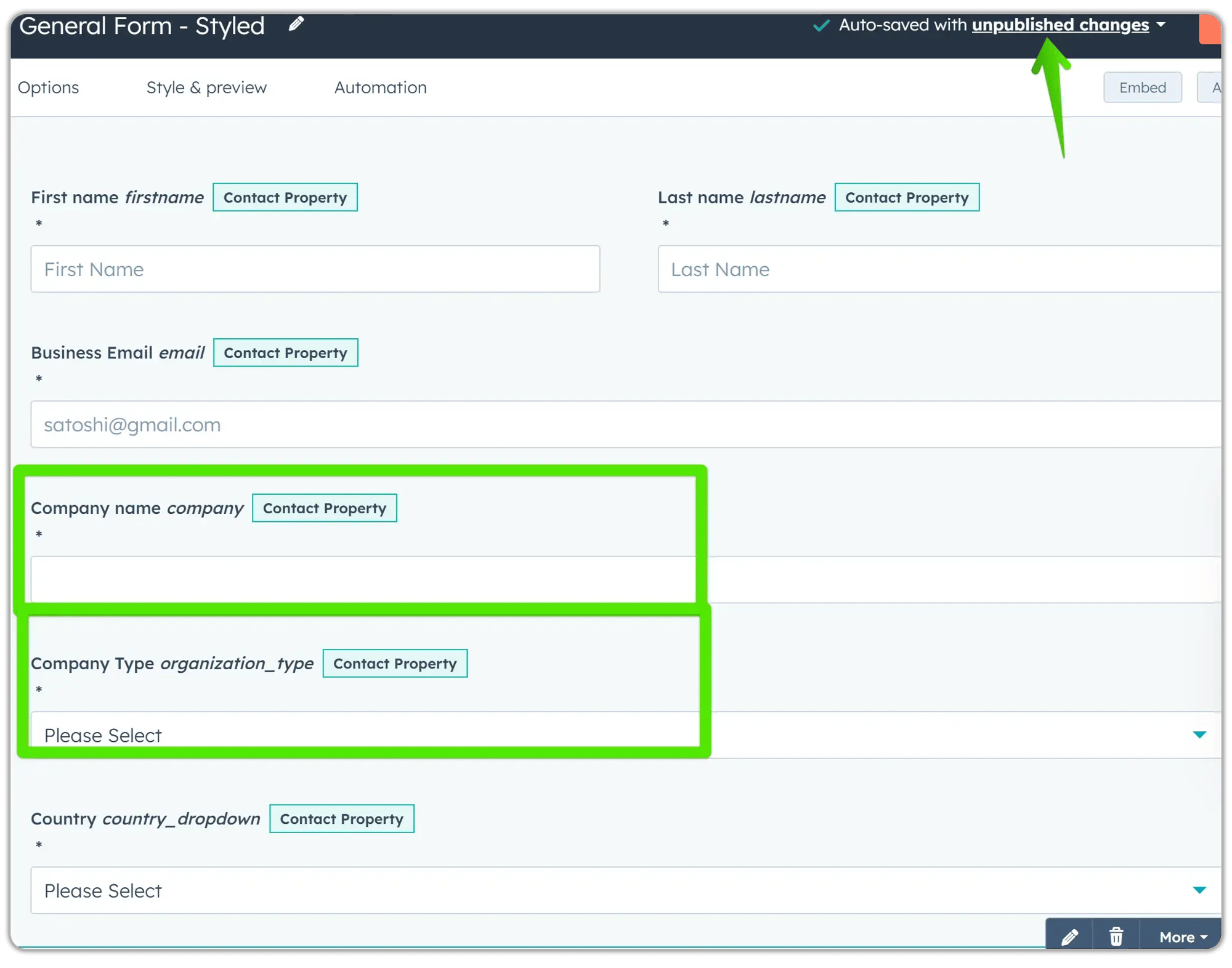
- Built event attribution tracking by creating a contact-level property and workflow system that allowed sales reps to tag attendees to marketing events retroactively, solving the vendor-provided attendee list problem and enabling accurate ROI analysis
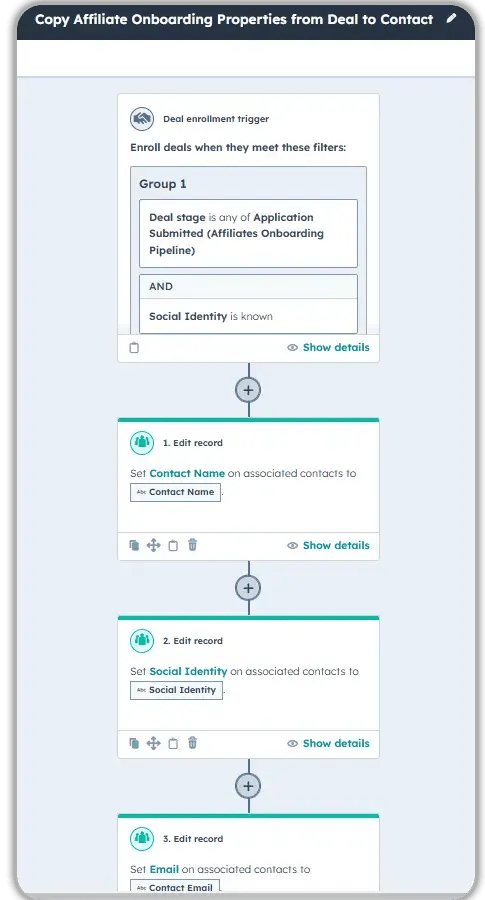
- Launched an affiliate onboarding pipeline with role-based permissions (BD team sees their leads, team leads see their team's leads, marketing ops sees everything) to support the company's expansion into influencer and agency partnerships
- Deployed weekly automated reporting that delivered new deals by owner, meeting outcomes by rep, and activity summaries every Monday morning, replacing manual report compilation and giving leadership a consistent pulse on sales execution
×
×
Part 3: Governance and Future-Proofing
- Established a quarterly duplicate management cadence with clear merge criteria and client approval workflows
- Created custom reports for deal velocity and inactive owner analysis so leadership could identify bottlenecks before they became revenue problems
- Built lifecycle stage funnel dashboards that tracked contacts moving through each qualification stage and calculated conversion rates from lead to MQL to SQL to closed-won, giving marketing and sales a shared scoreboard
- Documented event attribution processes so the marketing team could independently create new events, upload attendees, and measure ROI without technical support
- Set up automated reminders for stale deals, notifying owners when deals hadn't progressed in 90 days or when deal amounts were missing, ensuring pipeline hygiene became a built-in habit rather than a monthly cleanup task
Results
Before: Leadership operated with incomplete pipeline visibility, manual data cleanup efforts, and no reliable way to measure marketing event ROI.
After: The team gained real-time insight into funnel performance, automated deal risk management, and consistent data quality, enabling confident decision-making at every level.
-
Financial Impact
- Reduced lead leakage by implementing automated workflows that reassigned deals from inactive owners and notified leadership when high-value opportunities stalled
- Improved revenue visibility through lifecycle stage dashboards that tracked conversion rates at each stage and identified where prospects were dropping out of the funnel
-
Operational Impact
- Reduced manual sales work by eliminating the need for reps to manually update lead statuses, chase down deal ownership, or compile weekly performance reports
- Improved marketing-to-sales alignment through shared lifecycle stage definitions, automated handoff workflows, and event attribution that connected conference attendance to deal creation
-
Strategic Impact
- Single source of truth established through systematic duplicate management, consistent contact-to-company associations, and role-based permissions that ensured teams saw accurate, relevant data
- Data-driven decision-making enabled by dashboards showing real-time funnel performance, event ROI, and rep activity, allowing leadership to allocate resources based on evidence rather than assumptions
Digital asset platforms, fintech companies, and financial services firms operating in regulated markets face similar operational risks: complex sales cycles, high-value deals that can't afford to fall through the cracks, and compliance requirements that demand data accuracy.
If your team is managing HubSpot without full confidence in pipeline visibility, event attribution, or data quality, you're operating with more risk than necessary.
Book a free consultation to discuss your specific situation.
Others Case studies
Home Decor
Sales Hub |
Marketing Hub
11-50 Employees