How a Manufacturing Equipment Company Achieved Leadership Visibility & Decision-Making by Eliminating Sales Blind Spots with HubSpot
Manufacturing & Industry11-50 EmployeesSales Hub |
Service Hub
Background
King Kutter manufactures outdoor power equipment, tractors, implements, and 3-point attachments, distributed through dealer networks and retail locations across the United States. The company operates two brands: King Kutter and Taylor Pittsburgh, each serving distinct dealer segments with separate pricing structures.
Problem
With territory sales managers covering multi-state regions and thousands of dealer and retail locations to manage, HubSpot was meant to bring order to a sales operation that had outgrown spreadsheets and email.
Territory Coverage Was Invisible to Leadership: Sales managers couldn't see which dealers had been visited, which territories were underserved, or whether the 550 annual visit target per rep was being met. Activity data lived in individual calendars and notes. There was no way to measure territory performance or identify gaps before they became revenue problems.
Deal Tracking Relied Entirely on Memory: Without a pipeline system, deals existed only in the heads of individual reps. Leadership had no visibility into active opportunities, where deals were stalling, or why deals were being lost. Forecast accuracy was guesswork. If a rep left, their pipeline left with them.
Service Requests Created Internal Friction: Customer service inquiries arrived via email with no routing, no SLAs, and no accountability. Issues fell through the cracks. Response times varied wildly. There was no way to measure service team performance or identify recurring problems across the dealer network.
Solution
This wasn't about configuring a few fields and calling it done. King Kutter needed a system designed around how distributed sales teams actually operate, with the data structure, automation, and visibility to support growth without adding headcount.
×
Part 1: Diagnosis & Data Architecture for Field Sales Operations
Identified visibility gaps as data structure problems, recognizing that without proper company hierarchies and relationship mapping, no amount of reporting could accurately show territory coverage or dealer performance
Designed parent-child company architecture reflecting how corporate accounts connect to individual store locations across thousands of dealers, ensuring territory assignments and visit tracking aligned with actual business relationships rather than forcing the business model into generic CRM templates
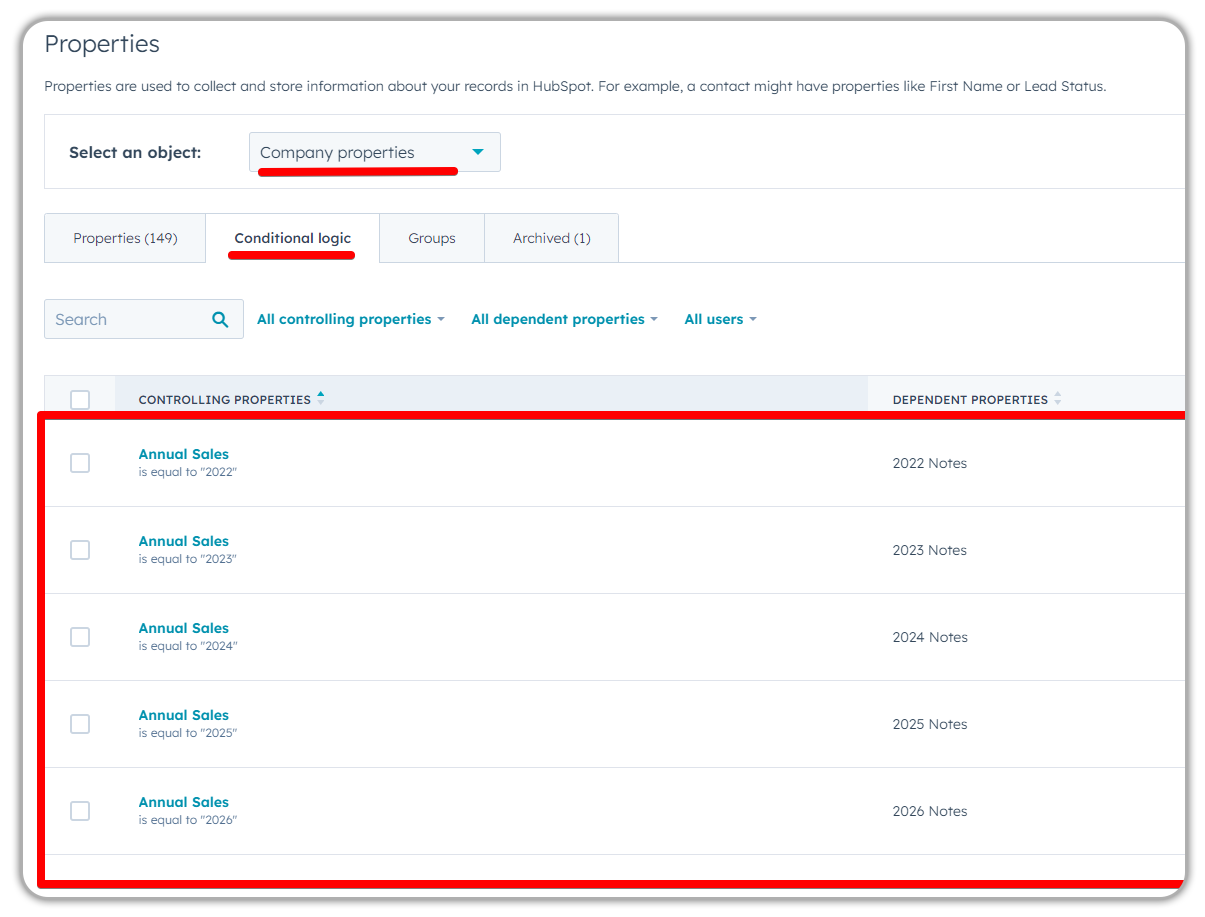
Created custom dealer intelligence properties capturing what reps actually need in the field, including tractor brands carried, 3-point equipment manufacturers stocked, and annual spend ranges by category, turning the CRM into a strategic reference tool instead of just a contact database
Structured product libraries to handle five separate pricing configurations based on brand and geographic region (King Kutter vs. Taylor Pittsburgh, Florida vs. non-Florida), ensuring accurate quote generation regardless of which combination of brand and territory the deal involved
Mapped deal pipeline stages to reflect how field sales actually progress through opportunities, not generic software templates, with required fields capturing the context needed for clean handoffs and accurate forecasting
Part 2: Execution & Team Enablement
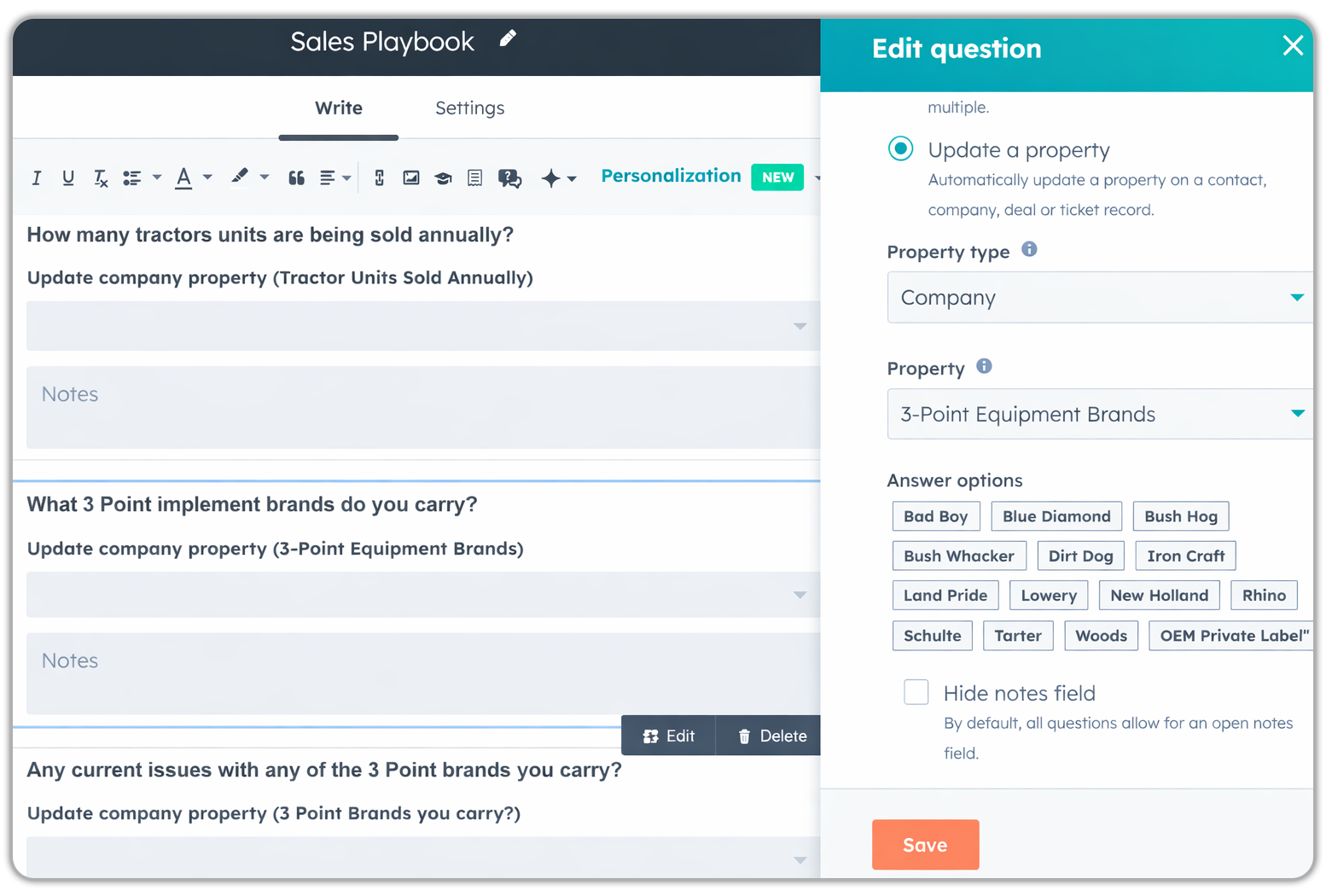
Built standardized sales playbooks capturing the dealer qualification questions top performers were already asking, making best practices repeatable across the entire sales team instead of relying on individual rep experience and judgment
Integrated Microsoft Outlook across the sales team so activity logging happened automatically when reps sent emails or scheduled meetings, removing the admin burden that typically kills CRM adoption in field sales organizations
Created follow-up sequences for common scenarios, including new dealer outreach, quote follow-up, and 90-day payment reminders, ensuring consistency didn't depend on individual memory or personal organization systems
Deployed service inbox with automated ticket creation and assignment routing, replacing an unmonitored email address with a system ensuring every service request had a clear owner and deadline from the moment it arrived
×
×
Part 3: Control & Visibility Infrastructure
Built custom territory performance dashboards showing visits completed by rep, states covered, and progress toward the 550-visit annual target, giving leadership real-time visibility into field activity instead of waiting for monthly spreadsheet updates
Enabled systematic capture of lost deal reasons tied to pipeline stage changes, transforming anecdotal complaints about pricing or competition into data that could inform strategic product and pricing decisions
Established service SLAs with automatic time-to-response and time-to-close tracking, making performance measurable for the first time and showing exactly where the service team excelled and where additional support was needed
Tagged meeting types by purpose (discovery, training, service follow-up) so leadership could analyze not just visit quantity but visit quality and effectiveness across territories, identifying which activities correlated with closed deals
Configured user roles and access levels, ensuring reps saw what they needed while protecting sensitive pricing and corporate data, building a permission structure that scales as the team grows without creating security gaps
Results
Before: Sales activity tracked in individual calendars. No central visibility into territory coverage, active deals, or service performance.
After: Complete visibility into field sales operations with 3,400+ dealer locations organized, pipeline management in place, and service operations running on SLAs.
Financial Impact
Increased pipeline predictability: Leadership gained the ability to forecast with confidence for the first time, with active pipeline visible across all reps and territories rather than locked in individual notebooks and memory
Improved close rates: Systematic capture of deal loss reasons revealed patterns in competitive losses and pricing objections that could be addressed strategically rather than anecdotally, enabling leadership to make product and pricing adjustments based on data
Clearer revenue attribution by channel: Territory performance dashboards showed which regions and dealer segments generated the most opportunity value, informing resource allocation decisions
Operational Impact
Reduced manual sales work: Territory sales managers no longer operated in silos or relied on memory to track which dealers needed visits, with automated activity logging eliminating end-of-day admin work
Improved sales activity visibility: The sales team adopted a standardized dealer qualification playbook, reducing inconsistency in how opportunities were evaluated and pursued across eight territory managers
Faster sales rep onboarding: Service response times moved from "unknown" to measurable with SLA tracking, and ticket routing eliminated the confusion of emails bouncing between inboxes with no clear owner
Strategic Impact
Real-time business visibility: For the first time, leadership could answer basic questions without waiting for monthly reports: Which territories are underserved? Are we hitting visit targets? Where are deals getting stuck?
Growth-ready systems: As the company scales, the infrastructure is in place to add reps without losing visibility or control, with territory assignment and performance tracking built to handle expansion
Data-driven decision-making: Service team performance became visible rather than assumed, enabling leadership to identify training needs, resource gaps, and recurring customer issues that needed product or process fixes
If your sales team operates in the field, if leadership needs visibility into what's actually happening in your territories, or if service operations still run through unmonitored inboxes, this is the kind of infrastructure work that makes growth possible without adding chaos.





.svg)

.png?width=60&height=46&name=Vector%20(3).png)