Skip to content

How a Health Tech SaaS Company Fixed Pipeline Blindspots to Increase Revenue & Pipeline Performance with HubSpot

Healthcare Technology 11-50 Employees Sales Hub | Marketing Hub
How a Health Tech SaaS Company Fixed Pipeline Blindspots to Increase Revenue & Pipeline Performance with HubSpot
Background-icon

Background

Longevity AI provides AI-powered health insights and longevity assessments to B2B clients. Based in the United States, the company sells a SaaS platform that helps organizations deliver personalized health recommendations to their end users.
Problem-icon

Problem

HubSpot sits at the center of their revenue operations, managing everything from initial contact through trial activation and contract close. As a growing health tech company, their ability to scale depended on having reliable data, clear sales processes, and efficient lead management.


  • Pipeline Gaps Were Hiding Revenue Leakage: Without a structured deal pipeline, the sales team operated in a gray zone. Deals moved between stages inconsistently. Some contacts entered trials without proper qualification. Others sat in "Demo" for weeks with no clear next action. Leadership couldn't answer basic questions: How many qualified opportunities do we actually have? Where are deals getting stuck? What's our real close rate? The cost wasn't theoretical. Every untracked deal was a potential lost customer. Every unclear handoff meant a prospect might go cold before someone followed up.

  • Manual Work Was Limiting Growth Capacity: The team couldn't scale their sales motion because too much relied on someone remembering to do something. Lead assignments happened manually. Follow-up emails were written one at a time. Trial reminders depended on calendar alerts. When prospects showed buying intent by visiting key pages, no one knew unless they happened to check. For a team trying to grow, this created a ceiling. More leads meant more manual work, not more closed deals.


  • Limited HubSpot Functionality Left Critical Gaps: Their professional plan didn't include native lead scoring. That meant the sales team had no automated way to identify which prospects were actually engaged versus which were just browsing. Without visibility into contact behavior and intent, reps treated every lead the same, wasting time on cold contacts while potentially missing hot ones. They needed lead scoring functionality, but an upgrade wasn't in the budget. The question wasn't whether to build workarounds; it was whether those workarounds could actually work at scale
Light-Bulb

Solution

Before touching HubSpot, we needed to understand what "good" looked like for their sales process. Quick fixes wouldn't solve this. They needed a foundation that could support growth, not just patch current problems.

Group 139-2 Group 139-2
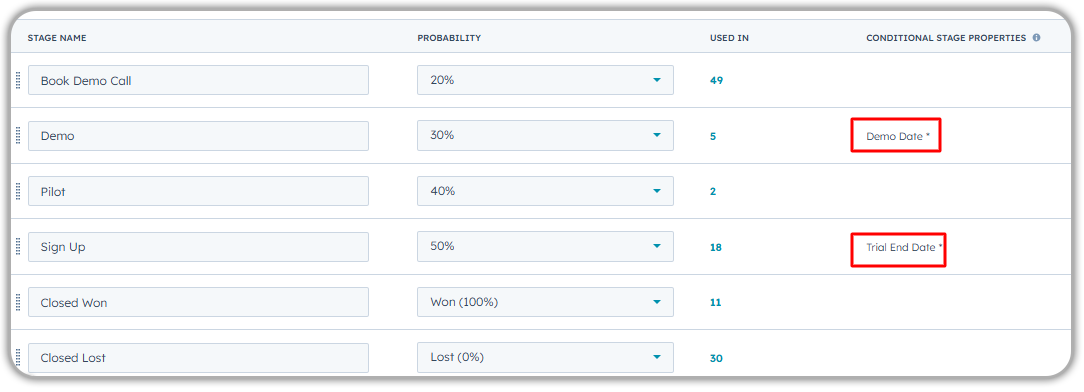
Mandatory fields and date tracking at critical stages
Group 141 (1)
Mandatory fields and date tracking at critical stages
Group 141 (1)
×

Part 1: Mapping the Revenue Engine to Reality

  • Ran a diagnostic to identify where revenue visibility was breaking down
  • Mapped their real buying journey from first contact through contract signature
  • Identified the specific decision points where prospects moved forward or stalled out
  • Designed two separate pipelines, one for lead qualification and one for deal progression, so each stage represented a meaningful business event
  • Created mandatory fields and date tracking at critical stages (demo completion, trial activation) so nothing moved forward without proper documentation

Part 2: Building Intelligence into the System

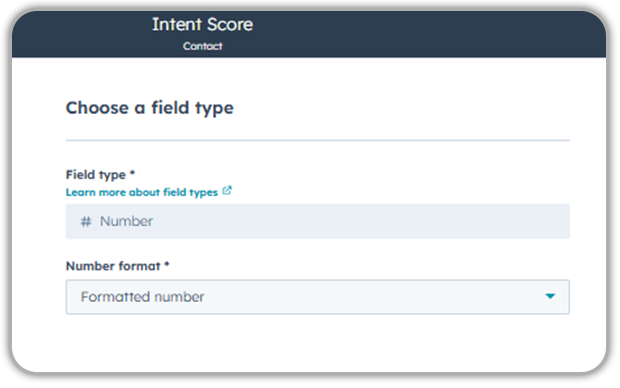
  • Built a custom intent scoring system using calculated properties and workflows (since native lead scoring wasn't available on their plan) that tracked prospect engagement across key website sections
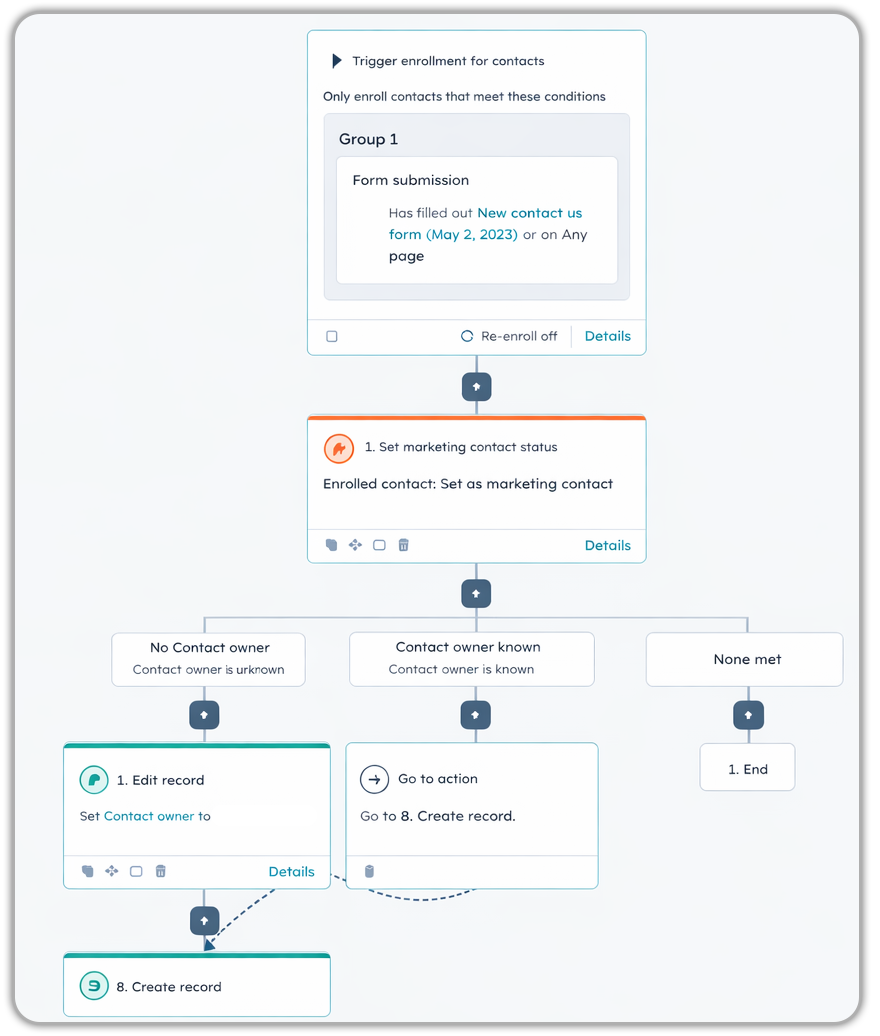
  • Created automated lead assignment so every new contact immediately went to the right person
  • Set up buyer stage-based email sequences that automatically enrolled contacts based on where they were in the journey: awareness content for early-stage prospects and ROI calculators for those ready to buy
  • Configured lifecycle stage progressions tied to specific actions (lead creation, qualification, deal association) so HubSpot always reflected current status
  • Added automated task creation at critical deal stages so reps knew exactly what to do next and when trial periods were ending
Lead Generation Workflow
Group 141 (1)
Lead Generation Workflow
Group 141 (1)
×
Intent Scoring
Group 141 (1)
Intent Scoring
Group 141 (1)
×

Part 3: Ensuring Long-Term Control

  • Created a structured contact view that surfaced intent scores immediately so reps could prioritize high-engagement prospects
  • Designed deal stage automations that prevented deals from moving backward or skipping critical steps
  • Set up reporting architecture that gave leadership real-time visibility into pipeline health and conversion rates at each stage
  • Built sequences with placeholder templates so their team could update messaging as the business evolved without breaking the automation logic
  • Established clear rules for when contacts moved between lifecycle stages to prevent data quality degradation over time
Vector (3)

Results

Before: Deals moved through an unclear pipeline with manual follow-up. No lead scoring. No automated nurturing. Limited visibility for leadership.
After: Structured pipelines with stage-specific automation. Custom intent scoring identifies engaged prospects. Automated buyer stage sequences. Real-time reporting for decision-making.
  • Financial Impact

    • Improved Pipeline Predictability: Leadership can now see exactly how many deals are in each stage and where bottlenecks occur. The structured pipeline with mandatory date fields means forecasting is based on documented progress, not guesswork.
    • Increased Sales-Ready Leads: The custom intent scoring system surfaces prospects who are actively researching solutions, demos, and customer proof, allowing the team to focus effort where it's most likely to convert.


  • Operational Impact

    • Reduced Manual Sales Work: Automated task creation, lead assignment, and stage-based follow-up removed the daily administrative burden. Reps now spend time selling, not managing their pipeline.
    • Improved Follow-Up Consistency: Buyer stage sequences ensure prospects receive relevant content based on where they are in the journey; no more missed touchpoints or generic outreach.
    • Faster Speed-to-Lead: New contacts are automatically assigned and entered into appropriate nurturing sequences within minutes of first interaction.

  • Strategic Impact

    • Real-Time Business Visibility: The structured pipelines and reporting gave leadership clarity on sales performance, conversion rates, and where deals stall, enabling faster course correction.
    • Growth-Ready Systems: The automation architecture supports scaling the sales team without requiring proportional increases in oversight or manual coordination.
    • Better HubSpot Adoption Across Teams: By building custom solutions for their specific needs (like intent scoring), the team gained more value from their existing HubSpot investment rather than requiring a costly upgrade.
Many growing SaaS companies face similar challenges: unclear pipelines, manual processes eating capacity, and limited visibility into what's actually working. The difference between those who scale efficiently and those who hit growth ceilings often comes down to whether their systems are designed for their actual business motion or just configured to default settings.
 
If your team is managing HubSpot manually, your sales process lacks clear stage definitions, or leadership can't quickly answer questions about pipeline health, these are signals worth addressing before they limit growth.
 
Book a free consultation to discuss your specific situation.

Others Case studies

Only Using 10% of HubSpot?

You can get these results too:

Group 14 (1) Group 14 (1)