Skip to content

How a Software Acquisition Firm Fixed Data Fragmentation to Achieve Leadership Visibility & Decision-Making with HubSpot

Software Development 11-50 Employees Sales Hub | Marketing Hub | Service Hub
How a Software Acquisition Firm Fixed Data Fragmentation to Achieve Leadership Visibility & Decision-Making with HubSpot
Background-icon

Background

Perseus Group is an experienced acquirer of software businesses operating across North America. As a B2B firm, they evaluate acquisition opportunities, conduct due diligence, and manage portfolio companies in the software sector.
Problem-icon

Problem

Their acquisition process depends on systematic deal sourcing, pipeline management, and coordinated communication between business development, due diligence, and operations teams. HubSpot serves as their marketing and pipeline management platform, while Salesforce functions as their system of record for deal tracking and portfolio management.


  • Leadership couldn't see the full acquisition pipeline: Perseus Group's leadership faced a visibility problem. Deal intelligence lived in Salesforce, but their marketing team and deal sourcing activities happened in HubSpot. Without reliable integration, executives couldn't track which marketing campaigns drove qualified acquisition targets or forecast deal flow with confidence. Board meetings and internal planning relied on manually compiled spreadsheets instead of live system data.


  • Marketing and sales teams operated with inconsistent processes: The team lacked standardized templates for emails, landing pages, and outreach. Every campaign required custom builds. New team members couldn't easily replicate what worked. Brand consistency depended on individual judgment rather than system-enforced standards. This slowed down campaign launches and increased the risk of off-brand communication reaching potential acquisition targets.


  • Data sync failures created manual reconciliation work: Initial attempts to integrate Salesforce with HubSpot resulted in mapping errors, missing fields, and incomplete records. The team discovered data wasn't flowing correctly only after deals had progressed through multiple stages. This forced operations staff into weekly manual audits to catch sync failures. The cost wasn't just time; it was the risk of losing deal context at critical negotiation moments.
Light-Bulb

Solution

This wasn't a matter of connecting two APIs and calling it done. Perseus Group needed systematic diagnosis of their data architecture, deliberate field mapping decisions, and operational processes that would stay reliable as their acquisition pipeline scaled.

Group 139-2 Group 139-2
Sales Active-Inactive
Group 141 (1)
Sales Active-Inactive
Group 141 (1)
×

Part 1: Data Architecture Analysis and Integration Design

  • Mapped how deal data flows through Perseus Group's acquisition process to understand which Salesforce fields drove decision-making and what HubSpot needed to track for marketing attribution
  • Identified nearly 2,000 Salesforce users (active and inactive) whose activities needed to sync without creating noise in HubSpot
  • Built custom properties to handle Salesforce's lookup fields and formula fields, data types that don't exist in HubSpot's native structure
  • Designed property mapping to preserve business logic while accounting for platform differences between the two systems
  • Configured integration with explicit master rules: Salesforce owns certain fields (always use Salesforce data when conflicts occur), while HubSpot owns marketing engagement data

Part 2: Template Systems and Brand Infrastructure

  • Created custom theme based on Perseus Group's brand guidelines and website as the foundation for all marketing assets
  • Built five template systems: landing pages, blog posts, email templates (standard, full-width, and newsletter formats), and pillar pages
  • Standardized email signatures across all HubSpot users to ensure consistent brand presence in every outbound communication
  • Migrated two existing landing pages from their external site into HubSpot, removing developer dependency for future campaign iterations
  • Eliminated decision friction by locking in layout, brand compliance, and conversion elements so marketing could launch campaigns faster
Email templates
Group 141 (1)
Email templates
Group 141 (1)
×
Sync errors
Group 141 (1)
Sync errors
Group 141 (1)
×

Part 3: Activity Integration and Systematic Issue Resolution

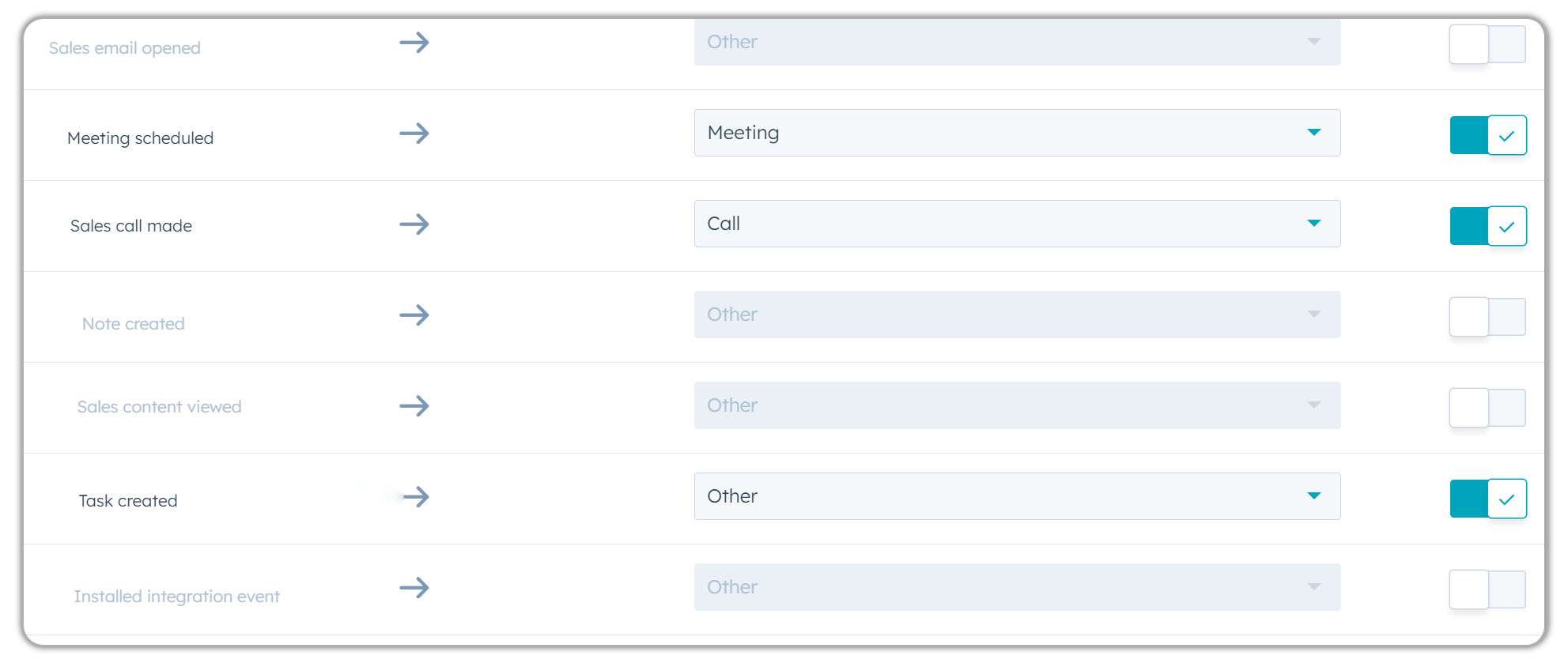
  • Configured Salesforce activity integration to automatically flow tasks, emails, meetings, and calls into HubSpot, creating unified activity timelines
  • Built active list system to segment contacts based on buyer persona properties pulled from Salesforce for targeted campaign execution
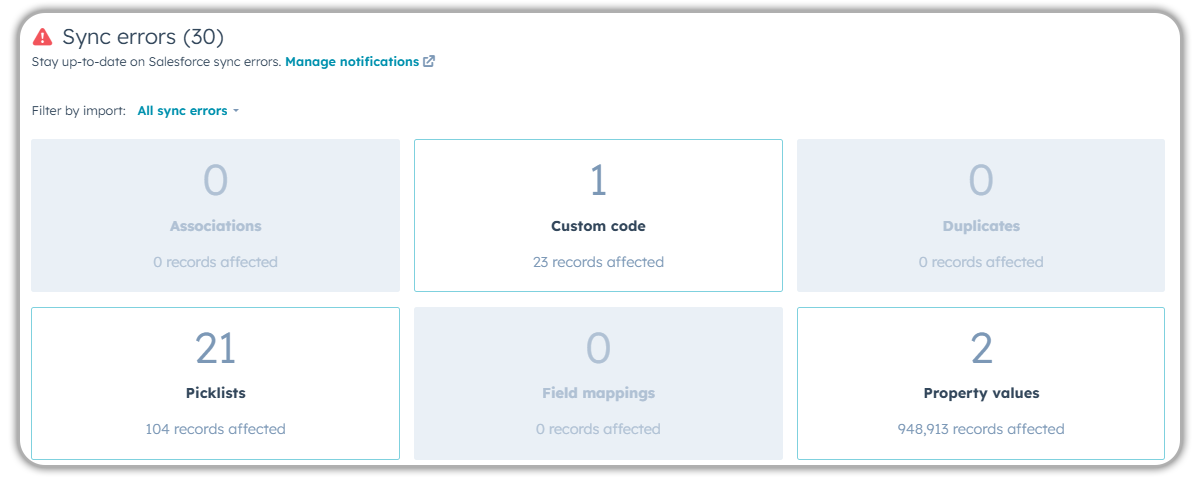
  • Implemented systematic fixes for integration issues that surfaced during production use, including company record type mappings and field sync logic
  • Corrected association rules to ensure data relationships remained accurate as deal volume increased
  • Tested each fix under real-world data volume to ensure reliability without requiring future re-implementation
Vector (3)

Results

Before: Leadership relied on manual spreadsheets to understand deal flow. Marketing campaigns launched slowly due to template dependencies. Data sync issues required weekly reconciliation.
After: Perseus Group operates with reliable data flow between systems, standardized marketing operations, and leadership visibility into their acquisition pipeline.
  • Financial Impact

    • Single source of truth for deal intelligence: Leadership now views real-time pipeline data that combines Salesforce deal records with HubSpot marketing engagement. Board reporting no longer requires manual data compilation.
    • Reduced operational costs from eliminated reconciliation work: The operations team shifted from weekly data audits to exception-based monitoring. Time previously spent fixing sync errors was redirected to strategic initiatives.


  • Operational Impact

    • More repeatable processes across marketing campaigns: Template systems reduced campaign launch time. New team members onboard faster because templates enforce brand and conversion best practices automatically.
    • Improved trust in HubSpot data: Marketing and sales teams stopped questioning whether contact records were complete or current. Confidence in system data changed how teams approach deal conversations and campaign targeting.
    • Better HubSpot adoption across teams: Standardized templates and reliable integration removed friction points that had discouraged team members from fully using the platform.


  • Strategic Impact

    • Earlier identification of bottlenecks: Leadership can now see where acquisition targets stall in the pipeline and which marketing channels drive qualified deal flow.
    • Growth-ready systems: The integration architecture and template infrastructure scale with deal volume. Adding team members or increasing campaign velocity doesn't require rebuilding foundational systems.
    • Improved cross-team consistency: Marketing, sales, and operations teams work from the same data without manual handoffs or version control issues.
Software acquisition firms, private equity groups, and M&A-focused organizations often operate across multiple systems while needing unified visibility into deal flow. If your team relies on manual processes to connect marketing activity with pipeline intelligence, or if leadership questions whether your CRM reflects reality, these challenges are solvable.
 
Book a free consultation to discuss your specific situation.

Others Case studies

Only Using 10% of HubSpot?

You can get these results too:

Group 14 (1) Group 14 (1)